
Every day, more than 122 million people visit YouTube, collectively watching a billion hours of videos. Those of us who tune in for handy how-to instructions can learn how to do anything from making a cheesecake, to gaining a digital skill, to mastering a new workout routine. That makes YouTube one of the most widely recognized sources of vicarious learning opportunities.
What is Vicarious Learning?
Simply put, vicarious learning takes place when we observe and learn from the experiences of others with whom we empathize (think fellow hapless homeowners who need video instruction to quickly pick up plumbing skills when unexpected leaks occur!).
"Also referred to as observational learning, vicarious learning is the acquisition of information, skills, or behavior through watching the performance of others directly or indirectly," explains Amanda Hagman, Ph.D., Atana's Chief Scientist.
In addition to watching videos, other examples of vicarious learning include reading about individuals' experiences, observing how colleagues interact with customers at work, or simply talking with someone and hearing how they handled a situation. The fact is, we frequently apply vicarious learning in our lives and have done so since we were toddlers watching the actions of those around us.
See Other Workplace Applications of Vicarious Learning
Vicarious learning is a flexible and effective asset in today’s workplaces. Common illustrations are methods with which every training and development professional is familiar—for example:
- Mentoring programs pair more experienced workers with new hires or those seeking new skills. Vicarious learning takes place when mentors demonstrate work techniques, provide advice, or explain elements of organizational culture.
- Job shadowing is a form of experiential training that enables employees to engage in vicarious learning by observing how colleagues in other roles perform their work.
- Peer learning takes place when colleagues teach each other on the job. This option for vicarious learning is widely used to train new hires or to encourage employees to share newly acquired knowledge or skills with co-workers.
- Leaders as teachers is a time-honored approach in which company executives (or leaders at other levels) lead workshops, development courses, town halls, or other gatherings in which they share their experiences and impart knowledge.
- Communities of practice are groups of employees who share a common interest in a particular job role, topic, or skillset, and occasionally gather (in person or virtually) to share their know-how. This method of vicarious learning is often found within human resources and other organizational business functions.
How Atana Leverages Vicarious Learning Opportunities
Hagman, who collaborates with the Learning Team to develop content that results in measurable behavior change, says that Atana courses offer particularly powerful training because vicarious learning is intentionally built into the programs' unique and award-winning instructional designs.
"A particular strength of Atana" says Hagman, "is the production of high-quality, relatable videos that help employees build a connection with the characters onscreen. Making those connections through vicarious learning enables people to see things in new ways. In turn, that experience drives attitude and belief shifts. As a result, employees are more likely to take action and change their behavior."
Atana's Director of Learning and lead scriptwriter Michele Chiarella says that intentionally and expertly designing video scenarios to be as relatable as possible for employees viewing Atana's training courses calls for focused research—and a lot of it. "I research real stories, true events. For example, to create our sexual harassment training programs, I researched news stories and looked at EEOC complaints." (The U.S. Equal Employment Opportunity Commission is the agency charged with enforcing federal laws forbidding various types of workplace discrimination.)
"I conduct interviews with subject matter experts," Chiarella explains, "and also pull from my own and others' personal experiences. Then I try to script the dialogue used in the video to be natural—the way we normally speak—so the characters that employees see onscreen in our training courses talk and act like the co-workers they see on the job every day."
Vicarious Learning Applied to Sexual Harassment Training
The premier sexual harassment training program, Once & For All, offers excellent examples of how Atana's instructional design and production team apply this expertise to the design process for every training video segment. Powerful video scenes like the two below allow learners to observe positive harassment-prevention behaviors related to being an "upstander" for respect at work.
An Upstander Reminds Others to Filter Their Behaviors

Clip from Once & For All ©2026 Atana
An Upstander Encourages a Co-Worker to Speak Up
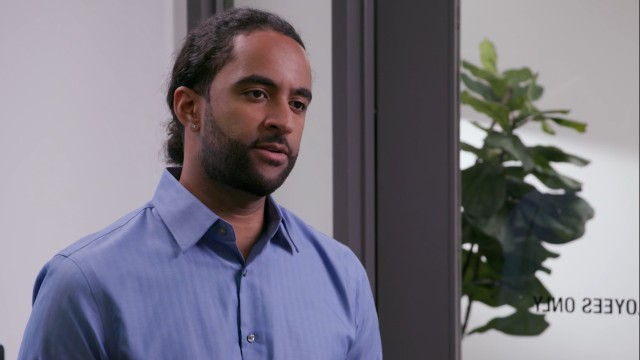
Clip from Once & For All ©2026 Atana
Says Hagman, "When people connect with relatable, compelling, behavior-centered content, amazing things can happen. People can develop skills from watching characters interact, and can meaningfully shift their attitudes and perceptions on challenging topics. These changes mean people become more inclined to engage in the behavior at the center of the training."
# # #
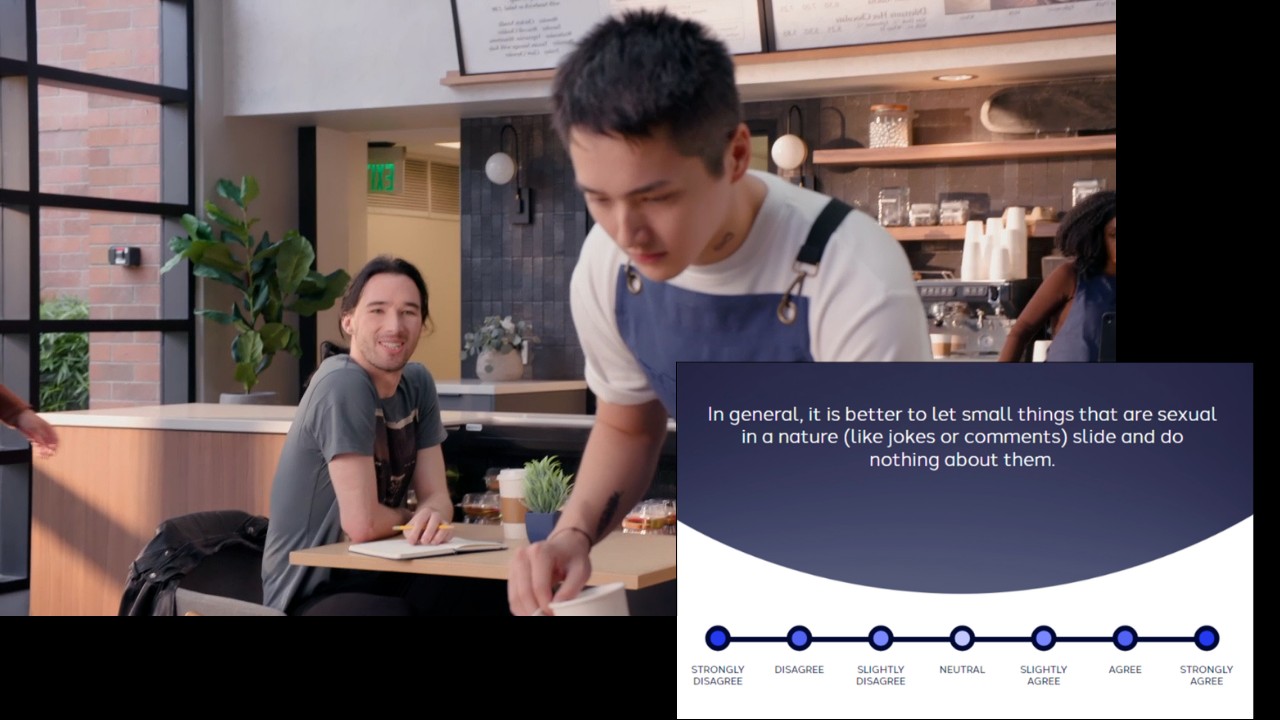
Around its vicarious learning scenarios, Atana embeds behavioral assessments designed to capture learner attitudes about what they're learning, how likely they are to apply it, and what would keep them from doing so. The resulting data (visualized on the Atana Organizational Insights dashboard) enables leaders to see where potential behavioral barriers exist, understand cultural dynamics, and take targeted action to improve training outcomes and improve performance.
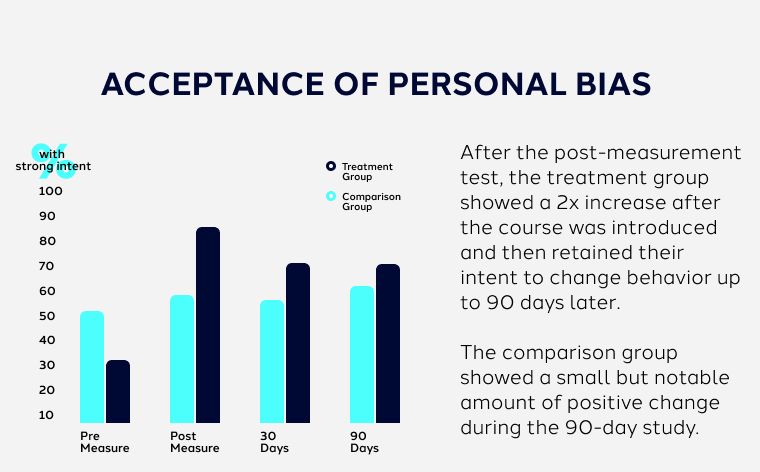
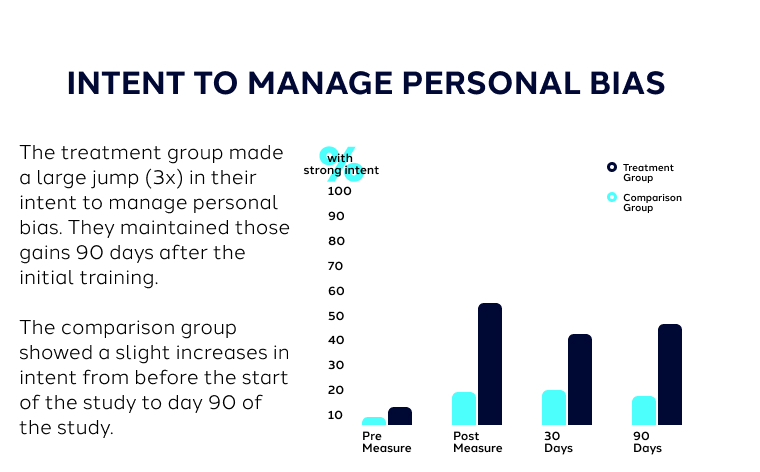
In the case of Unintentional Still Hurts, research revealed that employees who took the course had a 2x increase in acceptance of personal bias (the critical first step in changing behavior) and a 3x increase in intent to manage their bias. For employers, that is the ultimate win for their investment in organizational training.
The graphs below show the increase in learners’ awareness and intent following training with Unintentional Still Hurts.